The Next Era of Ecommerce: The Shifts Redefining Growth
At our latest Nosto Experience Series event in London, The Next Era of Ecommerce: The Shifts Redefining Growth, industry leaders gathered to unpack a big question:
What does growth look like when AI isn’t a differentiator, but the default?
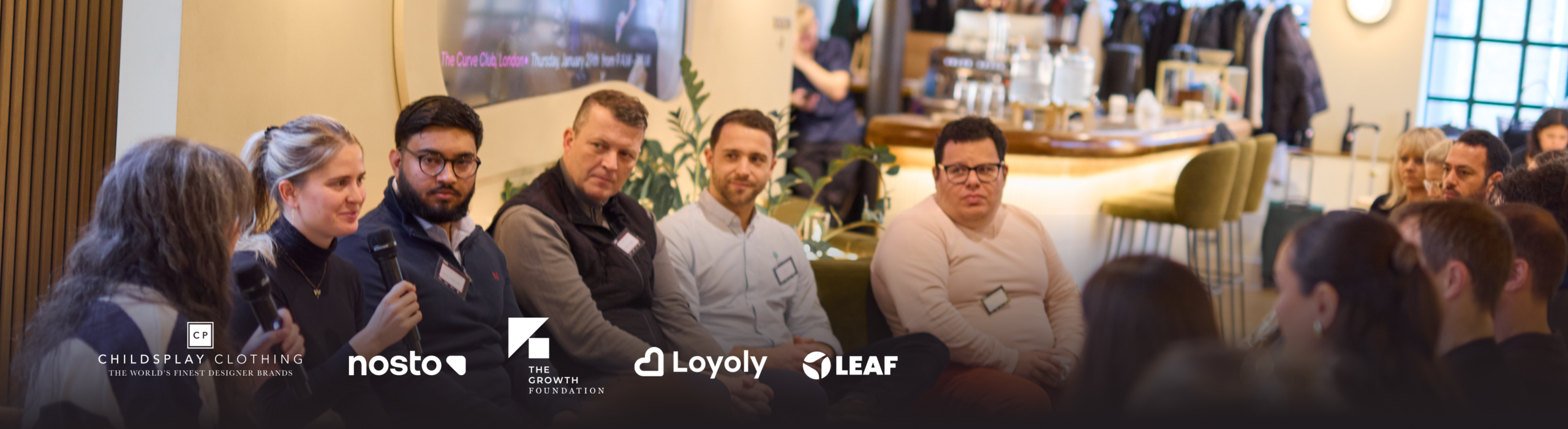
Moderated by Chloë Thomas, Host of the eCommerce MasterPlan Podcast, the panel brought together:
- Azeem Chowdhury, Digital Lead at Childsplay Clothing
- Jo Thomas, Senior Customer Success Manager at Nosto
- Richard Chapple, Co-Founder at The Growth Foundation (ex-CMO at Gymshark)
- Joseph Aubry, CEO at Loyoly
- Gilbert Corrales, CEO at Leaf
From agentic AI to loyalty economics, one theme was clear: 2026 won’t reward experimentation alone. It will reward operational excellence.
AI is here. Now what?
We’ve spent the last two years asking how AI can improve ecommerce. According to the panel, the better question now is: How should our businesses change as a result?
Richard Chapple challenged brands to think beyond tools and focus on operating models.
“We’ve now got machines that can make decisions faster than ever. The question is, can your organization keep up?”
AI agents can optimize pricing, personalize journeys, and even influence merchandising decisions in real time. But if internal approvals still bottleneck progress, the tech won’t deliver its full value.
This isn’t just a technological shift. It’s an operational one.
Discovery is the new battleground
Chloë shared upcoming research revealing that 60% of consumers have already tested—or are open to using AI shopping assistants, according to the latest Nosto research. The biggest opportunity? Product discovery and decision support.
Jo Thomas explained what that means in practice:
- Shoppers expect proactive personalization
- Irrelevant recommendations will push them elsewhere
- Early-stage discovery is where expectations are highest
If AI is guiding shoppers, your product data needs to be structured, enriched, and accurate. Otherwise, you’re training the machine to misunderstand your brand.
Intentional discovery, powered by intelligent personalization, is no longer optional. It’s foundational.
Foundations first. Always.
Gilbert Corrales used a surfing metaphor to describe the current moment: brands are in the water, waves coming from every direction, AI agents, algorithm shifts, and data privacy changes. The instinct is to paddle harder.
But speed without balance? You wipe out.
His advice: double down on fundamentals.
- Own your first-party data
- Understand where data is leaking
- Feed ad platforms accurate signals
- Get crystal clear on lifetime value (LTV) and contribution margin
Because as targeting becomes more automated, your data quality becomes your competitive edge.
Loyalty isn’t a discount strategy
As acquisition grows more fragmented and product discovery shifts toward AI agents, Joseph Aubry argued that retention will become ecommerce’s strongest moat.
But not through endless promotions.
“Don’t think in terms of discounts,” he advised. “Think in terms of incentives, habits, and community.”
If autonomous agents begin selecting products on behalf of consumers, loyalty mechanics may influence those decisions, especially when tailored rewards or benefits are part of the equation.
In other words, it’s not just about being chosen once. It’s about being chosen again.
Relevance starts before the first click
For Azeem Chowdhury at Childsplay Clothing, AI is already transforming behind-the-scenes workflows—from enriching missing product data to improving search and merchandising logic.
The opportunity isn’t just what happens on-site.
It’s what happens before the shopper arrives.
If your catalog data is inconsistent, incomplete, or siloed, no AI tool can compensate. Clean data enables accurate personalization, better search results, and stronger product discovery.
Sell the right product first, and everything downstream becomes easier.
Turning first-time buyers into second-time customers
One audience question cut straight to the heart of profitable growth:
How do you convert a first-time buyer into a second-time buyer?
The panel’s answers converged around one idea: relationship-building.
- Reduce purchase anxiety (think sizing, shipping clarity, reassurance messaging)
- Use post-purchase communication strategically
- Remove friction, such as unexpected fees
- Create a memorable unboxing and brand experience
- Test incentives based on actual customer behavior
Because retention doesn’t start with the second email. It starts with the first order.
The dual challenge of 2026
Joseph summed up the tension brands now face:
You must optimize for machines, and for humans.
On one side: structured data, intelligent automation, margin visibility, and AI-ready content.
On the other hand: trust, authenticity, community, and emotional connection.
Ignore either, and growth stalls.
As Chloë concluded, this year will be busy. Strategic. Foundational. The brands that win won’t be those chasing every new AI feature. They’ll be the ones making deliberate decisions about where automation adds value, and where human differentiation still matters most.
Because in the next era of ecommerce, growth won’t come from doing more.
It will come from doing the right things intelligently.