Personalized Search
 Category Merchandising
 Product Recommendations
 Post-Purchase Upsell
 Dynamic Bundles
 Personalized Emails
 A/B Testing & Optimization
 Content Personalization
 Behavioral Pop-Ups
 Shoppable UGC
 Shopify Plus
 Shopify
 Salesforce Commerce Cloud
 Shopware
 Adobe Commerce
 BigCommerce
 Klaviyo
 Attentive
 Yotpo
 Tapcart
 Google Analytics
 TikTok
 Instagram
 Facebook

Bloomreach connects with major ecommerce platforms like Shopify and Shopify Plus, Salesforce Commerce Cloud, and Magento/Adobe Commerce. It also links to enterprise CDPs (Customer Data Platform) and marketing tools like Salesforce, HubSpot, and Segment. These integrations help you unify customer data across your email, SMS, onsite experiences, and paid channels.
Bloomreach reviews: what users say about search, pricing and fit
If Bloomreach is on your shortlist, you are likely looking for more than just personalization tools. Ecommerce leaders researching Bloomreach reviews want to know how the platform handles search, merchandising, customer data, and long-term ROI (Return on Investment).
Bloomreach is most commonly used by enterprise brands with massive catalogs and complex strategies. However, user feedback across multiple review platforms shows that your success often depends on your technical resources and operational scale.
This article breaks down what users praise, the challenges teams face, how Bloomreach pricing works, and what to consider when looking at a Bloomreach alternative.
What is Bloomreach and how does it work?
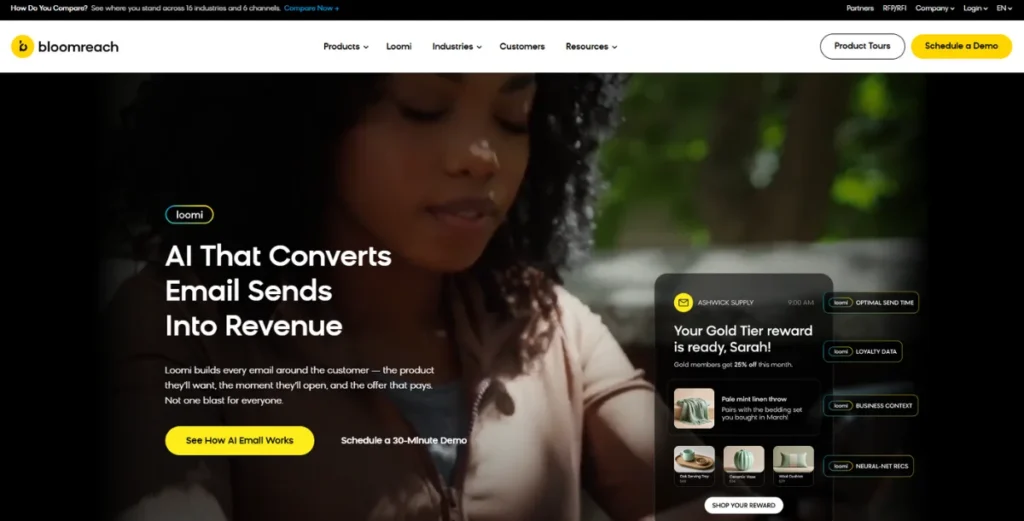
Bloomreach is a digital experience platform that connects your customer data with your product catalog. It uses 3 main modules to help you manage your storefront:
- Bloomreach Engagement: Tools for marketing automation.
- Bloomreach Discovery: AI-powered search and merchandising.
- Bloomreach Content: A system for managing site content.
The platform relies on Loomi AI to personalize your site, optimize search results, and automate campaign decisions. While you can find specific Bloomreach pricing by contacting their sales team, the platform usually targets enterprise brands that need scalable solutions.
Bloomreach Engagement
This module helps you understand your customers and reach them through email, SMS, and push notifications. You get a central profile for every shopper and a visual tool to build automated journeys.
When you look at Bloomreach reviews, users often highlight these benefits:
- Simple drag and drop journey builders
- Easy coordination across different marketing channels
- Fast customer segmentation
- Smooth management for complex workflows
Some Bloomreach customer support reviews note that setting up custom reports or site search analytics can feel technical as you grow. You might need extra support during onboarding to master the advanced reporting logic.
Bloomreach Discovery
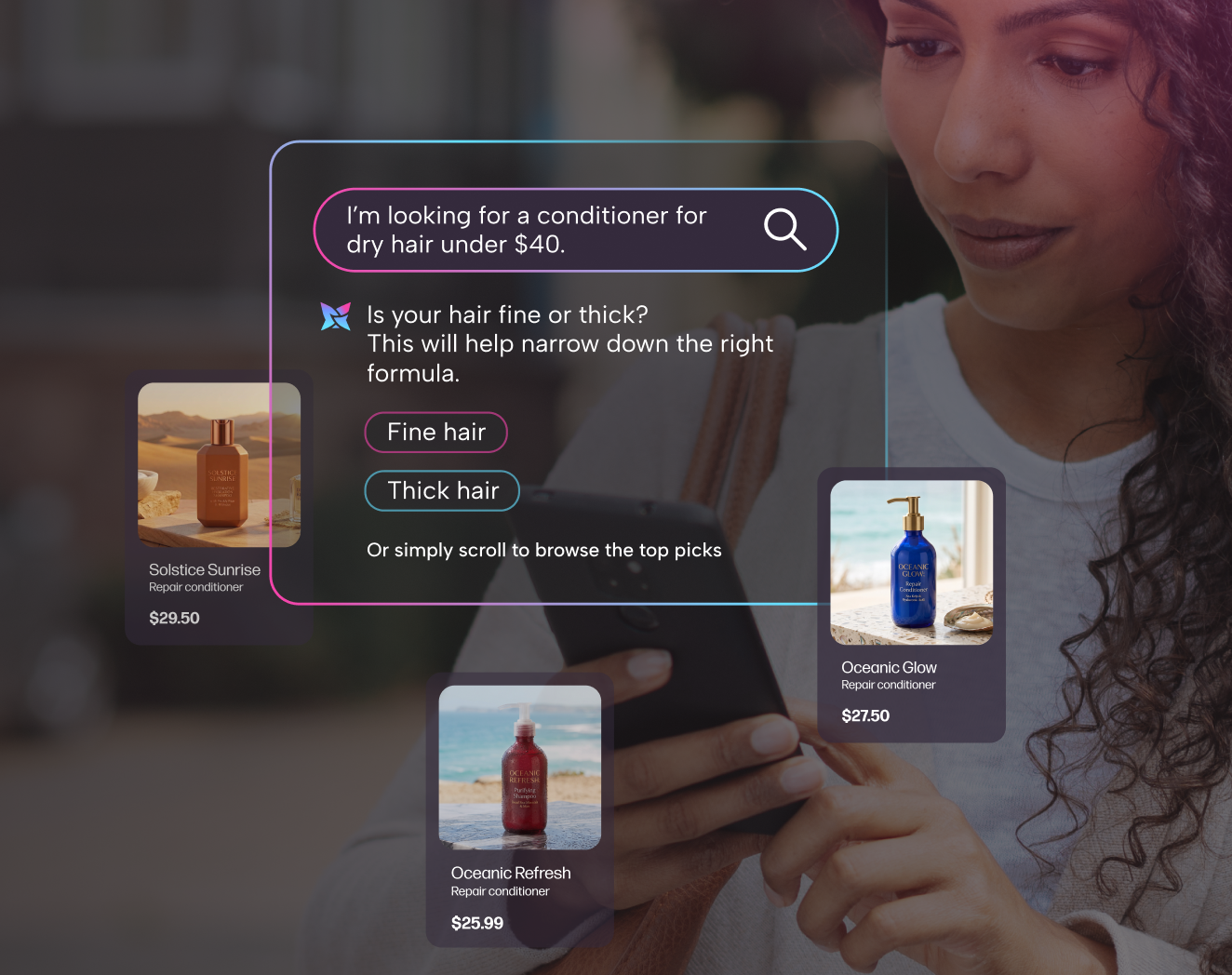
Bloomreach Discovery’s AI-driven ecommerce search helps shoppers find products on your storefront through site search and product recommendations. Reading Bloomreach GenAI product discovery reviews, users frequently note how easily the tool manages massive product catalogs.
If you manage a Shopify Plus store, you know shoppers use natural language rather than perfect product titles. Loomi Search+ uses semantic search to understand what shoppers actually want, allowing your storefront to show relevant items for:
- Massive product lists
- Products with many technical details
- Vague or long search queries
- Complex merchandising across many categories
If you evaluate Bloomreach alternatives or Bloomreach competitors, you will see that Discovery stands out for its conversion efficiency. It uses real-time behavior to make sure every shopper sees the products most likely to lead to a sale.
What do reviewers say about Bloomreach?
Reviewers on G2, Capterra, TrustRadius, and Gartner Peer Insights describe Bloomreach as a sophisticated platform with powerful AI. But they also mention that you may feel the need for more once you scale.
The table below shows the most common reviews that users have about Bloomreach:
| Category | What users love | Important considerations |
| AI and personalization | Fast real-time modeling and Loomi AI speed | Technical effort to configure advanced features |
| Search (Discovery) | Semantic search and personalized relevance | Higher ROI mostly for large product catalogs |
| Ease of use | Simple drag and drop campaign builders | Steep learning curve for custom reporting |
| Customer support | Helpful onboarding and success teams | Long API support |
| Pricing | Flexible enterprise options | High entry cost for mid-market brands |
Bloomreach pricing: what to expect
Bloomreach offers customized pricing, meaning your quote will depend on your catalog size, customer volume, and your specific use of tools like email or SMS.
The typical structure includes:
- Base fee: A fixed cost for the modules you choose, like Engagement or Discovery.
- Usage fees: Costs based on your site traffic and customer activity.
Is it worth the investment?
Large brands with high traffic can see a strong return: a 2024 Forrester study commissioned by Bloomreach estimated a 251% ROI over 3 years for Bloomreach Engagement at a large enterprise retailer.
If you are a mid-market brand with a smaller team, consider the total cost of ownership. You must account for the technical staff needed to manage a complex setup. If the cost or effort feels too high, you might explore Bloomreach alternatives or Bloomreach competitors that offer faster setup and lower overhead.
Also, check Bloomreach reviews and Bloomreach customer support reviews to see how other brands at your scale handle the implementation and ongoing costs.

What to look for in a Bloomreach alternative
If you are looking for one, you need to know what to prioritize in a new platform. Most mid-market ecommerce teams want a Commerce Experience Platform (CXP) that improves product discovery and fits their existing workflows.
Below are some features that you should focus on during your evaluation:
Search quality that understands shopper intent
As your catalog grows, search performance impacts your product discovery, conversion rates, category merchandising visibility, and average order value. Look for semantic and vector search capabilities that understand:
- Natural language queries
- Actual shopper intent
- Relationships between different products
- Synonyms and contextual meaning
For Shopify Plus brands, this creates a relevant experience without forcing you to manage manual search rules constantly.
Faster speed-to-value
Implementation timelines are very important when deploying new platforms. A platform that takes months to configure delays your revenue-impacting improvements. Many growing teams now prioritize:
- Native Shopify Plus integrations
- Fast onboarding processes
- No-code merchandising controls
- Out-of-the-box real-time personalization
This allows you to optimize your storefront without adding pressure to your engineering team.
Unified merchandising and personalization
Search, product recommendations, category merchandising, and content personalization all impact how shoppers find products. When these systems run separately, you often face inconsistent data and disconnected reporting.
A unified Commerce Experience Platform brings these workflows into one place. This allows your team to manage:
- AI-driven ecommerce search
- Product recommendations
- Category merchandising rules
- Personalized content and ranking
Total cost of ownership that matches your growth stage
Platform evaluations go far beyond subscription pricing. To understand your long-term ROI, you must account for implementation effort, technical maintenance, and the internal resources required to run the system.
If you’re operating in the $10M–$100M gross merchandise value (GMV) range, the right platform often comes down to balancing enterprise-grade capabilities with operational flexibility and faster deployment cycles.
That’s where the differences between traditional enterprise suites and newer agentic Commerce Experience Platforms become more visible. Nosto, for example, combines AI Search, Category Merchandising, Content Personalization, and Product Recommendations inside a unified platform powered by experience.AI™. This real-time intelligence engine continuously connects customer, product, and behavioral data across the storefront.
Schedule a demo with Nosto to see how AI-powered search and Merchandising can improve product discovery across your storefront.

Frequently asked questions
Here are answers to the most common questions from ecommerce leaders evaluating Bloomreach and the alternatives in the market.
What does Bloomreach integrate with?
How does Bloomreach compare to Klaviyo for ecommerce marketing?
Klaviyo focuses mainly on email and SMS marketing through segmentation and lifecycle automation. While Klaviyo handles messaging, Bloomreach manages a much broader layer of the commerce experience. This includes customer data, AI-powered Search, Merchandising, and on-site content personalization.
How long does a Bloomreach implementation typically take?
Implementation timelines depend on how much of the platform you’re deploying and on the complexity of your existing data infrastructure. For example, if you’re rolling out Bloomreach Engagement only, your team can typically go live faster with mature systems already in place.
Similarly, full discovery and engagement deployments often take 3 to 6 months, especially when custom data pipelines, AI personalized search, and category merchandising workflows are involved.
What industries use Bloomreach?
Bloomreach is used most heavily by retail and ecommerce brands, especially in fashion, apparel, beauty, and consumer goods, where large catalogs and personalized shopping experiences directly impact revenue.
You’ll also see the platform used across hospitality, travel, financial services, manufacturing, and gaming.
Conclusion
Bloomreach is a strong fit for enterprise ecommerce brands with large catalogs, mature data infrastructure, and the internal resources to support complex Personalization and Search deployments. For many mid-market Shopify Plus teams, the bigger consideration comes down to implementation overhead, speed-to-value, and how quickly the platform can drive measurable ecommerce performance.
That’s why many growing ecommerce brands are evaluating platforms like Nosto. As an agentic Commerce Experience Platform, Nosto combines real-time commerce intelligence with Huginn, its built-in AI commerce agent that helps teams find growth opportunities, optimize Merchandising workflows, and accelerate experimentation across the storefront.
Book a demo with Nosto to explore how AI-powered product discovery can support ecommerce growth with less implementation complexity.