No, they’re not the same thing. Vector search is one of the tools that makes semantic search possible, turning content into numbers that a computer can compare for meaning. Semantic search is the bigger goal, helping you find results that match what you meant.
What is semantic search and how it works
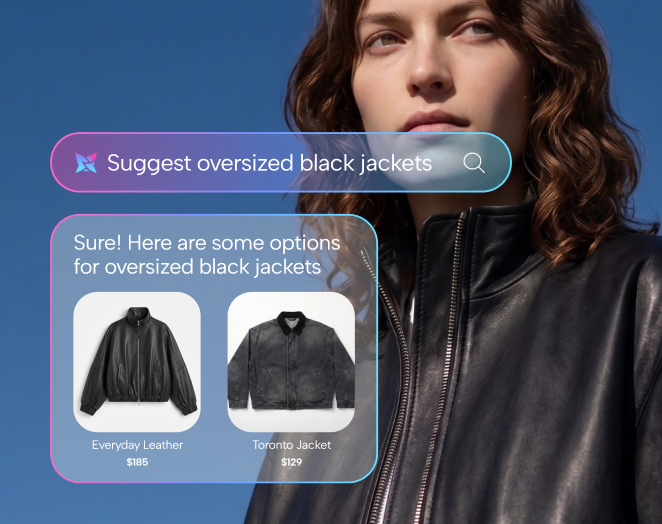
A shopper on your online store is looking for a jacket to wear on a winter hike. They type “warm jacket for winter hiking” into the search bar, and insulated, waterproof jackets show up on the results page. Even though none of the product titles include the word “warm.”
Semantic search is what makes that match possible, connecting a shopper’s words to relevant products by meaning, even when the exact phrasing differs from what’s in the catalog.
You’ll learn what semantic search is, how it works, and where it matters most for your store’s search experience.
What semantic search is and how it works
Semantic search is a way for search tools to understand what you mean when you type a query. To figure that out, these tools look at your words, the context around them, and what you’re most likely trying to find.
A semantic search engine doesn’t need your query to match a document word for word. The goal is understanding what you meant.
From keyword matching to meaning
Older search worked like a literal assistant. Type “red running shoes,” and it would scan for pages or products containing those exact words. Misspell something, skip a word, or use a different term, and the results disappear entirely.
Semantic search takes a different approach. A search for “shoes for jogging in the rain” can return waterproof running shoes, even when the word “waterproof” never appears in the query.
The system reads relationships between concepts and works out what you meant from context.
The role of vectors and embeddings
Computers don’t read words the way you do. To understand meaning, semantic search turns your words into numbers, sometimes called embeddings. Words with similar meanings get similar numbers. Words with very different meanings get very different numbers.
Vector search is the process that compares those numbers. When you type a search, the system checks the numbers behind your words against the numbers behind every product in the catalog.
Products with numbers close to yours show up as matches, even if the exact words don’t line up. That’s one of the main techniques behind semantic search.
How relevance is ranked
Finding related results solves only half the problem. Ranking them by importance is the other half.
Most semantic search engines combine vector similarity with other signals, like click history, freshness, and business rules that a company wants applied.
Blending these signals is what pushes the single best answer to the top for the shopper.

The difference between semantic and keyword search
We already covered this above, but let’s understand it more deeply.
Keyword search looks for exact words, whereas semantic search looks for meaning. That distinction changes how each system handles synonyms, typos, and longer, descriptive queries.
Keyword search is fast and predictable, and works well when someone knows exactly what they want, like a model number or a brand name. Trouble starts the moment a query uses different words (or descriptive sentences) than the ones stored in the data.
Semantic search closes that gap, recognizing that “pullover” and “sweater” might mean the same thing, or that “dress for partying” and “party dress” point to the same product.
Longer, conversational queries work too, because the system matches on meaning across the whole phrase.
| Aspect | Keyword search | Semantic search |
| Matching method | Exact words or close variants | Meaning and intent, even with different wording |
| Synonyms | Needs to be added manually | Recognized automatically |
| Long-tail queries | Often struggles | Handles natural, descriptive phrasing well |
| Best fit | Exact-match lookups: SKUs, model numbers, brand names | Vague, descriptive, or conversational queries |
Real-world examples of semantic search
Semantic search shows up in more places than most people realize. Here are a few concrete examples across web search, ecommerce, and AI assistants.
| Where | What you type | What happens |
| Web search | “how tall is the tower in Paris” | Returns facts about the Eiffel Tower, even without the word “Eiffel” in the query |
| Ecommerce | “warm jacket for winter hiking” | Surfaces insulated, weather-resistant jackets, even if none of the titles use the word “warm” |
| AI assistant | “what should I pack for a rainy weekend hike” | Pulls relevant gear recommendations based on meaning |
| Voice search | “find me something to fix a squeaky door” | Returns lubricant or oil products, despite no literal keyword match |
You can see more of these patterns in these ecommerce search examples.
Why semantic search matters for the search experience
Search is often the clearest sign of intent on a website, but only when it works. Nosto’s site search statistics show that 69% of shoppers head straight to the search bar when they land on a site, and 80% have left a store entirely after a poor search experience.
Poor relevance is a widespread problem. According to Baymard Institute, 20% of ecommerce sites have issues supporting ‘Product Type’ searches, returning too many irrelevant results, or no way to narrow down to the right category.
A shopper who searches “couch” on a site that only recognizes “sofa” comes up empty on most of these sites, through no fault of their own. Semantic search changes that outcome for shoppers.
Fewer zero-result pages, less retyping, and a faster path to a relevant result all follow from that same shift toward understanding meaning. The payoff shows up in outcomes brands already track, including fewer abandoned searches and higher overall site satisfaction.

How semantic search powers ecommerce product discovery
Your product catalog is messy, and that’s normal. The titles, descriptions, and tags rarely match the exact words your shoppers type into the search bar. Semantic search is built to handle that for you.
At Nosto, we call it semantic AI. It reads a query, breaks it down into its underlying intent, and matches that intent against every relevant product field, including the title, description, category, and tags. That’s what lets a vague or broad search still land on the right products.
That shows up in a few concrete ways for your store:
- Better product discovery: Your shoppers rarely type the exact words in your catalog. Semantic search understands what they mean anyway. That works for broad searches, like “something warm for winter,” and specific ones, like a gift idea.
- Fewer zero-result pages: A “no results found” page is one of the fastest ways to lose a shopper. Semantic matching still finds relevant products, even if the words don’t match your catalog exactly.
- Support for long-tail queries: Shoppers increasingly type full sentences, the way they’d talk to a person. Semantic search can read a query like “gift for a coworker who loves hiking” and still find the right products.
Search results are only part of the discovery puzzle. Shoppers often find their favorite products through recommendations they never searched for in the first place.
Nosto’s Product Recommendations, use real-time shopper behavior to surface those items automatically. Nosto’s Personalized Search covers the search side of discovery, matching what shoppers type to the products that fit.
Want to see it in action? Book a walkthrough with the Nosto team.
Semantic search in AI and large language models
Search bars are no longer the only place semantic search shows up. Modern AI systems rely on it too, using the same meaning-based matching to find and use information.
Retrieval augmented generation (RAG)
Large language models train on a fixed set of data, so their knowledge can go stale or stay too general for a specific question.
Retrieval augmented generation, or RAG, solves this by using semantic search to pull relevant, current information from a separate knowledge base before the model generates its response.
The model grounds its answer in retrieved content that matches the question.
AI assistants and chatbots
Semantic search, paired with natural language processing, lets an AI assistant hold something closer to a real conversation.
That blend of semantic search and NLP lets a chatbot understand a loosely worded question, find the right supporting information, and respond in a way that answers it.

Frequently asked questions (FAQs)
These are quick answers to the questions you’re probably asking about semantic search.
Is semantic search the same as vector search?
Does semantic search replace keyword search?
No, not on its own. Most tools today combine both approaches. They match exact keywords for things like model numbers and use semantic search for everything else. You’ll usually get better results this way than from either approach alone.
What is semantic search in SEO?
Semantic search rewards content that covers a topic fully. You’ll rank better when you answer related questions, define key terms, and connect ideas across a page. Those signals help search engines recognize real topical depth.
Does Google use semantic search?
Yes, and it has for years. Google’s Hummingbird update in 2013 taught the algorithm to focus on the intent behind your search. BERT built on that in 2019, helping Google grasp full sentence context.
What should you look for in a semantic search solution?
Keep these criteria in mind when you evaluate a semantic search solution:
- Relevance quality: Can shoppers find what they want, even with a typo or the wrong word?
- Hybrid search support: Can you search by exact words and by meaning at the same time?
- Scalability: Can it keep up as your catalog grows?
- Multilingual support: Does it work well in the languages your customers speak?
- Integration: Can you connect it to your product catalog without extra hassle?
- Personalization: Can it show different shoppers different results based on their behavior?
- Speed: Does it stay fast when your site gets busy?
- Analytics: Can you see what shoppers search for, and where you’re losing them?
Conclusion
Shoppers are getting more comfortable describing what they want in their own words, and they expect your search results to keep up. That’s why we suggest you use Nosto to stay ahead of that shift.
Nosto is an agentic Commerce Experience Platform (CXP) built for ecommerce retail brands. Over 1,500 brands in 100+ countries already use it. The platform brings product search, personalization, and merchandising together in one connected shopping experience.
Nosto’s Personalized Search puts semantic search to work, turning natural, everyday language into results that shoppers convert on. See how it works for your store with a personalized demo.