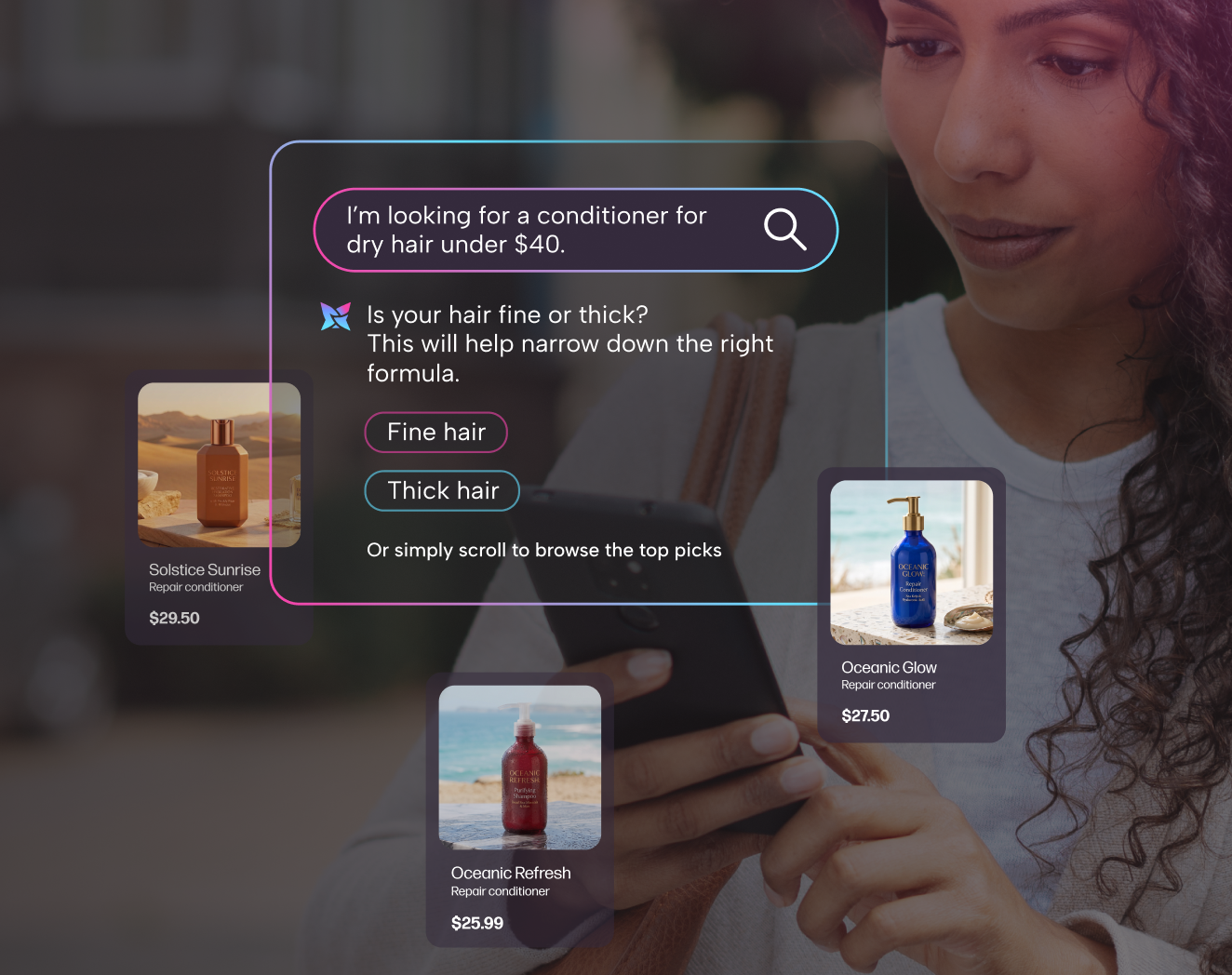
If you are searching for Constructor alternatives, you are probably past the research phase.
You have seen what the platform offers. You understand the value of AI-powered product discovery. What you are trying to figure out is whether there is a better fit for your catalog size, your team’s workflow, or your budget.
That is exactly what this guide is for. We break down the best ecommerce search platforms so you can compare the available options clearly and make a well-informed call.
Top Constructor competitors at a glance
Before we get into the detailed comparison, here’s a quick look at the top Constructor alternatives:
Nosto: Connects product discovery, merchandising, personalization, and recommendations through one shared commerce intelligence layer powered by Huginn, Nosto’s AI commerce agent.
Algolia: Gives development teams deep control over search infrastructure, Application Programming Interfaces (APIs), and custom storefront search experiences.
Athos Commerce: Focuses on consolidating ecommerce discovery operations, including search, merchandising, reporting, and product data management, into one platform.
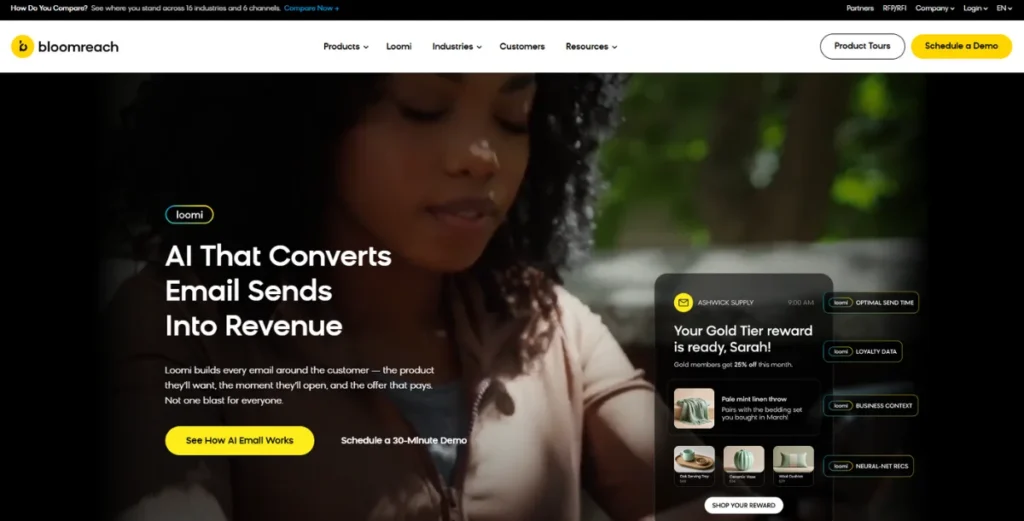
Bloomreach: Pairs search with customer data and content personalization for enterprise retailers running massive, multi-market catalogs.
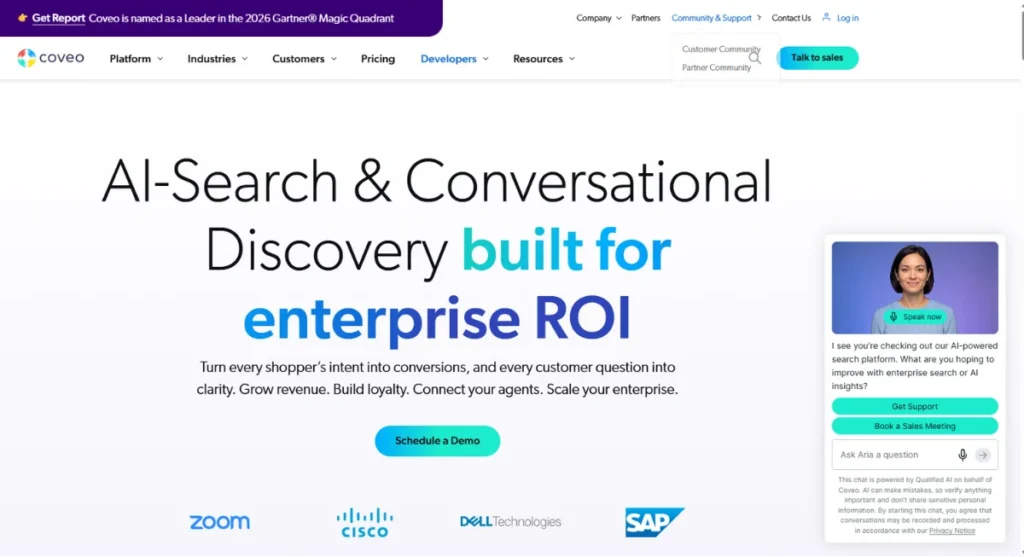
Coveo: Delivers large-scale AI search that extends beyond ecommerce into enterprise-wide system indexing and cross-channel content discovery.
What to look for in an ecommerce search platform
An effective ecommerce search engine should maintain relevance across 10k to 100k stock-keeping units (SKUs) while still giving merchandising teams precise operational control.
Here are a few features that you should look out for when evaluating the best hybrid search platforms for ecommerce:
Semantic and vector search
Shoppers rarely type the exact wording from your product feed. You need an ecommerce search platform that catches the intent and context behind broad or imperfect queries.
When your platform handles synonyms and conversational phrasing naturally, shoppers discover the right products on the first try. For inspiration, see these examples of ecommerce search done well.
Unified data layer
Search works better when it connects with the rest of your storefront. Platforms that combine search, recommendations, and merchandising in one system can use shopper behavior more effectively across the entire experience. That means relevance improves naturally over time as more customer and product data flows through the platform.
Merchandising control
If you’re a scaling Shopify Plus ecommerce brand, your team needs to have direct control over product visibility. Look for search and merchandising platforms that let your team independently manage seasonal inventory, prioritize high-margin products, and adjust ranking logic without raising a support ticket.
Zero results rate visibility
High-intent shoppers leave fast after a failed search. In fact, Nosto’s ecommerce search research reveals that 80% of consumers abandon an ecommerce site due to a poor search experience. To protect your revenue, you need an ecommerce search engine that instantly flags zero-result queries, so you can fix blind spots before customers bounce.
When your platform uses natural language processing (NLP), typo tolerance, and smart synonym matching, you turn zero-result searches into purchases.
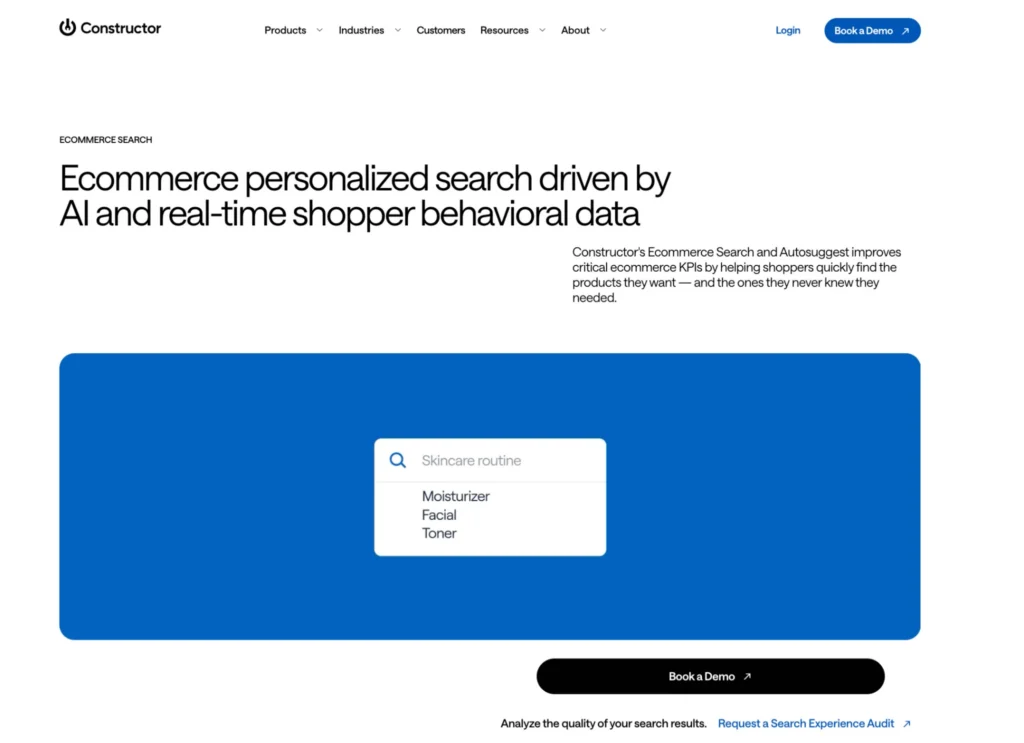
Constructor is positioned as an enterprise-grade ecommerce search platform, particularly for organizations handling complex catalog structures and large product volumes.
When digital teams evaluate alternatives in this category, the platform is typically recognized for its core focus on algorithmic search optimization and real-time behavioral data processing. Understanding how its architectural design handles these scaling discovery environments helps brands determine where it aligns with their specific technical requirements.
Where Constructor performs well
Ecommerce teams who have used Constructor consistently talk about a few key strengths, which include:
Smart Search Relevance: The platform handles messy search behavior across massive enterprise catalogs, accurately understanding shopper intent and context.
Real revenue gains: Many brands report clear boosts in conversion rates and lower zero-results rates after moving to Constructor. Teams also see great success with localized ranking strategies.
Great support teams: Users frequently praise Constructor for its collaborative onboarding experience. The account managers stay highly responsive, giving you helpful strategic guidance through every major merchandising push.
Where Shopify Plus brands may see limitations
Moving past search quality, the actual decision usually comes down to your day-to-day operations. As a Shopify Plus brand, you need to look closely at setup complexity, integration depth, and how easily your search data talks to the rest of your storefront experience.
Here are some considerations that commonly come up during the evaluation process:
Enterprise-oriented pricing and onboarding: Constructor’s pricing model is tailored to enterprise scopes, meaning mid-market or growing brands typically undergo a custom evaluation process to align total licensing costs with expected usage parameters as their data footprints expand.
Algorithmic search and manual control workflows: Constructor leans on machine learning to optimize product rankings automatically, with visibility into how those decisions are made. Merchandising teams should evaluate how that balance fits their workflow, especially if they prefer hands-on, query-by-query control over ranking and testing.
Search operates as a dedicated layer: Constructor is designed to prioritize specialized ecommerce search functionality. Organizations wanting an all-in-one suite frequently evaluate whether they prefer a dedicated search engine or an integrated system where search, recommendations, and content personalization share a unified backend data architecture natively.
The top 5 Constructor alternatives for ecommerce brands
When choosing the best ecommerce search platform, search relevance is only part of the equation. As your catalog grows, factors like implementation complexity, merchandising control, personalization, and Shopify Plus integration become just as important.
Below are 5 Constructor alternatives that ecommerce brands commonly evaluate when comparing product discovery platforms.
1. Nosto
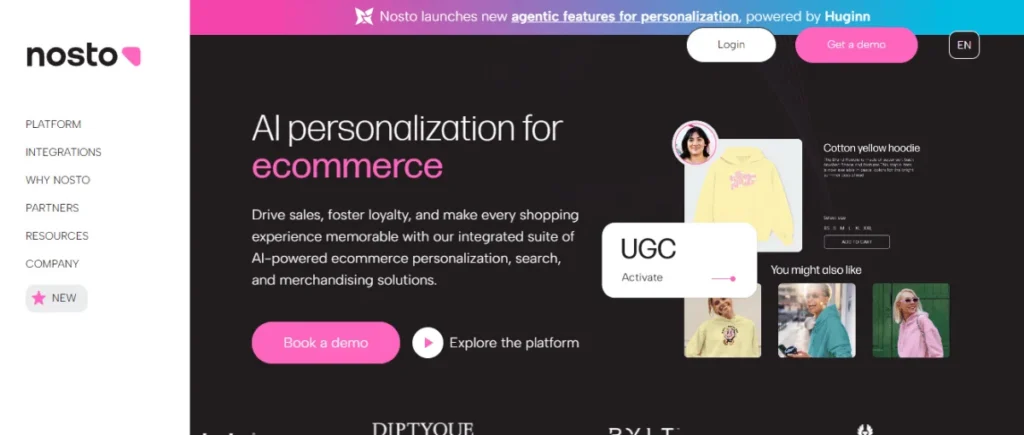
Nosto, a Shopify Plus Certified Partner, is an agentic Commerce Experience Platform (CXP) designed for enterprise ecommerce brands that want product discovery, merchandising, and personalization to work together more seamlessly.
Constructor is a well-regarded search and product discovery solution built with large retailers in mind. For brands seeking broader capabilities across the buyer journey, Nosto offers a unified Commerce Experience Platform where search, recommendations, personalization, and merchandising all run on the same core data engine.
With Nosto, business teams maintain direct control. Merchandisers can execute complex search and personalization strategies without relying heavily on engineering resources, utilizing features like advanced merchandising rules, collection sorting driven by product intelligence metrics, and page-specific algorithms—such as geo-trending, bundles, and replenishment. Multi-armed bandit optimization continuously selects high-performing algorithms automatically, helping teams deploy sophisticated strategies and achieve faster time-to-value.
Fashion brand A.L.C., for example, used Nosto’s Personalized Search to improve relevancy, automate merchandising during sales periods, and reduce manual search management for its lean ecommerce team. The brand increased click-through rate on search pages by 30%, while conversion rate more than doubled during targeted merchandising campaigns.
Schedule a demo to see how Nosto can help your ecommerce team turn shopper behavior into more relevant search and personalization experiences.
2. Algolia
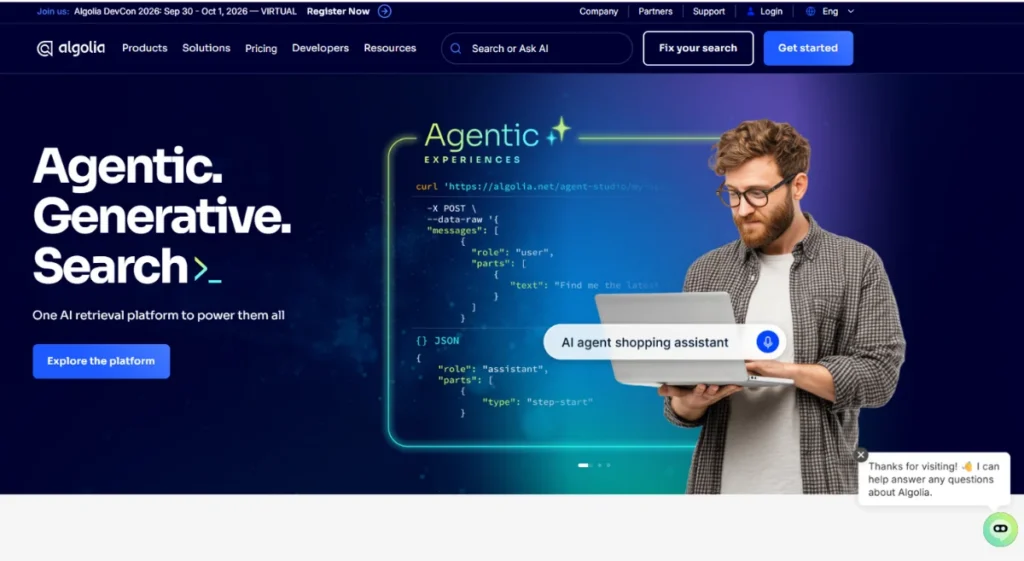
Algolia provides fast search infrastructure through an API-first model, giving your in-house engineers complete control over customization.
Best for: Brands with in-house developers who want to build highly customized search experiences.
Key features: API-first search and discovery, hybrid keyword and AI search, front-end libraries for building search interfaces, merchandising tools.
Consider: Getting the most value usually takes developer resources. Pricing scales with usage, such as records and search requests.
While Nosto connects search, recommendations, and merchandising natively on a single data layer, brands evaluating Algolia often look at API-first frameworks to design highly customized storefront experiences alongside their broader tech stack.
3. Athos Commerce (formerly Searchspring and Klevu)
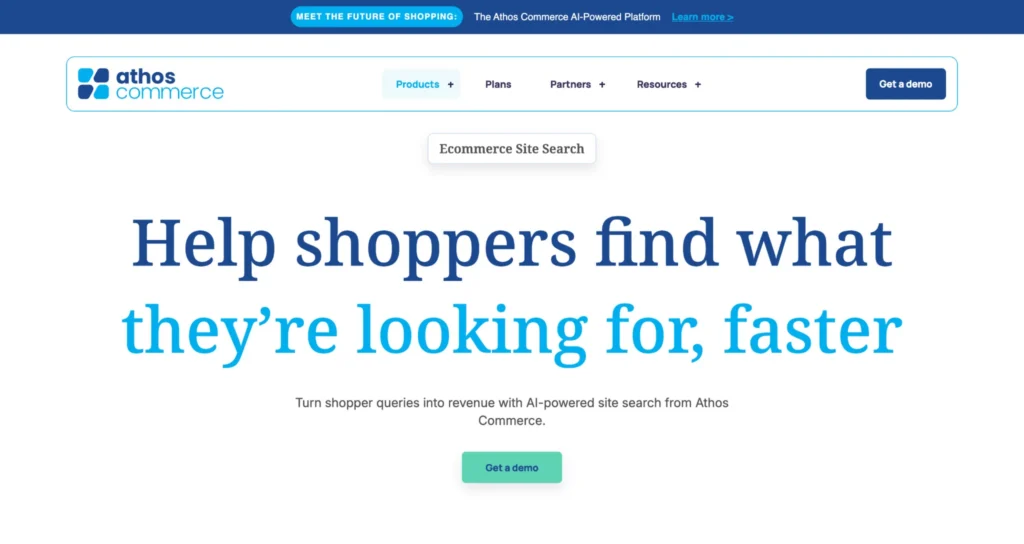
Athos Commerce was formed in 2025 when Searchspring and Klevu merged. It brings search, merchandising, personalization, reporting, and product data management into one platform. While Constructor focuses deeply on search and discovery optimization, Athos Commerce provides an alternative platform approach by pulling multiple discovery workflows into a single layer.
Best for: Mid-market brands that want search and merchandising operations consolidated.
Key features: AI search and merchandising, product recommendations, reporting, product data management.
Consider: As a recently merged company, check which product the offer is based on and the roadmap for bringing the two platforms together.
4. Bloomreach
Bloomreach combines enterprise-grade search, personalization, and content management for large-scale retailers. When compared to Constructor, Bloomreach focuses extensively on broad multi-channel campaign management, audience targeting, and content management for large-scale enterprise retailers.
Best for: Enterprise retailers that want search alongside omnichannel marketing and customer data.
Key features: Bloomreach Discovery for AI search and merchandising, Engagement for customer data, email and SMS, and Content.
Consider: Value scales with data volume and catalog size, and full deployments typically need dedicated technical resources.
Coveo provides enterprise AI search features for organizations with highly fragmented data. While Constructor designs solutions specifically tailored to ecommerce product discovery, Coveo provides a wide-reaching architecture designed to index internal company files and cross-channel knowledge bases alongside storefront data.
Best for: Enterprises that need one search platform across commerce, customer service and internal knowledge.
Key features: AI search and relevance, generative answering, product recommendations, merchandising tools.
Consider: The platform’s scope is broader than ecommerce, which can be more than a commerce-only team needs.
How to choose the right platform for your catalog and tech stack
The right ecommerce search platform should match your catalog complexity, team structure, and implementation capacity. To narrow down and choose the right platform for your tech stack, focus on getting answers to these questions:
How many SKUs do you manage today, and how quickly is the catalog growing?
As your SKU count scales past 10,000, search behavior becomes less predictable, long-tail queries spike, and category merchandising grows complex. Instead of creating more manual work, your ecommerce search platform must automate this operational load.
An AI site search analytics platform for ecommerce teams should help you manage that operational load without creating more manual work.
Do you need search as a standalone tool or as part of a unified discovery platform?
Decide whether you need a standalone search engine or a unified discovery platform.
While standalone tools only process queries, unified platforms connect search, recommendations, and merchandising. This connection links your data, allowing the system to learn from customer behavior and automatically improve storefront relevance.
As your personalization strategy grows, a unified architecture prevents data silos and delivers more accurate product discovery.
How important is deep Shopify Plus integration for your team?
For Shopify Plus brands, integration depth also has a direct operational impact. A strong Shopify Plus integration can reduce implementation overhead, shorten deployment timelines, and make ongoing merchandising workflows easier to manage.
If your team relies heavily on native Shopify Plus operations, partner depth and certification can matter just as much as feature sophistication when evaluating a Shopify Plus search platform.
Frequently asked questions (FAQs)
Here are answers to the questions ecommerce teams most often ask when evaluating Constructor alternatives and ecommerce search platforms.
What is the difference between semantic search and keyword search?
Keyword search looks for exact matches to the words a shopper types into the search bar.
Semantic search understands the meaning and intent behind those words. It connects customer intent to the right products, allowing shoppers to use synonyms or broad phrasing and still find what they need, even if the exact words don’t match your catalog titles.
Is Constructor right for Shopify Plus brands?
Constructor offers robust enterprise-level AI search capabilities. For Shopify Plus brands, the key questions are how deep the native integration goes, how quickly the platform can be deployed, and whether the vendor is a Shopify Plus Certified Partner. Nosto is a Shopify Plus Certified Partner, with a native integration built for Shopify Plus workflows.
What should I ask a search vendor before signing?
Some questions that you should ask a search vendor before signing a contract are:
How deep is the platform’s Shopify Plus integration, and are they a Certified Partner?
How does the team handle zero-result queries across large catalogs?
Does search data connect with product recommendations and merchandising on a shared layer?
How long does it take to deploy an ecommerce search platform?
The platform deployment timeline depends on your catalog size, tech stack, and engineering resources. Dedicated in-house developers can launch an API-first platform within days by handling the integration directly.
However, complex enterprise platforms that need custom AI training and multi-market catalog syncing can stretch implementation over several months.
Conclusion
Constructor, Algolia, Athos Commerce, Bloomreach, and Coveo all bring different strengths to ecommerce search and Product Discovery. The right choice usually depends on your catalog complexity, team structure, Shopify Plus requirements, and how closely you want Ssearch to connect with merchandising and personalization across the storefront.
Nosto brings those workflows together through one connected commerce experience layer powered by experience.AI™ and Huginn, Nosto’s built-in AI commerce agent. Huginn continuously analyzes shopper behavior, surfaces optimization opportunities, improves search relevance, and helps teams automate merchandising and personalization workflows.
Schedule a demo with Nosto to see how Huginn helps you reduce zero-results searches, automate ranking decisions, and improve product discovery at scale.
Explore more articles
Ecommerce
Bloomreach reviews: what users say about search, pricing and fit
If Bloomreach is on your shortlist, you are likely looking for more than just personalization tools. Ecommerce leaders researching Bloomreach reviews want to know how the platform handles search, merchandising, customer data, and long-term ROI (Return on Investment). Bloomreach is most commonly used by enterprise brands with massive catalogs and complex strategies. However, user feedback […]
Read more Ecommerce
Showroomprivé partners with Nosto to power personalization across one of Europe’s largest Shopify replatformings
Nosto, the agentic Commerce Experience Platform (CXP), today announced a new partnership with Showroomprivé, one of Europe’s largest online private sales players, ranked in the top 5 in the Fashion category in the latest Harris Interactive–a Toluna company x FEVAD 2025 study. A landmark Shopify replatform The partnership supports Showroomprivé’s migration to Shopify Enterprise with a […]
Read more Ecommerce
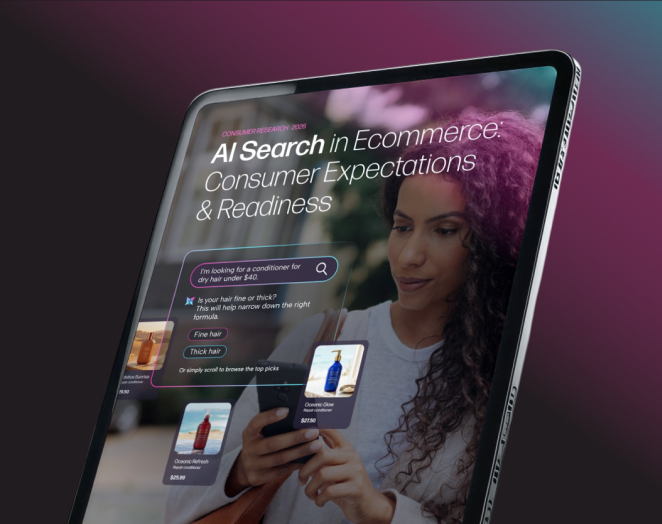
AI Search in Ecommerce: Consumer Expectations & Readiness
Read more News & Press
New research: Retailers without onsite AI search risk losing shoppers to ChatGPT and Claude
40% of online shoppers are likely to turn to AI assistants if retailers’ onsite search doesn’t deliver – while 72% have already tried or are open to retailers using AI to improve their onsite search New York, September 18 – 59%¹ of US and UK consumers surveyed admit they often leave ecommerce stores because the […]
 Personalized Search
 Category Merchandising
 Product Recommendations
 Post-Purchase Upsell
 Dynamic Bundles
 Personalized Emails
 A/B Testing & Optimization
 Content Personalization
 Behavioral Pop-Ups
 Shoppable UGC
 Shopify Plus
 Shopify
 Salesforce Commerce Cloud
 Shopware
 Adobe Commerce
 BigCommerce
 Klaviyo
 Attentive
 Yotpo
 Tapcart
 Google Analytics
 TikTok
 Instagram
 Facebook