Running ecommerce at scale means managing a growing number of decisions across search, personalization, merchandising, content, and customer engagement.
As customer expectations continue to rise, many brands are turning to Artificial Intelligence to improve product discovery, automate repetitive tasks, and create more relevant shopping experiences. The challenge is finding a platform that can connect these capabilities instead of adding more complexity to your technology stack.
In this guide, we explore how Nosto helps ecommerce brands use AI across the customer journey, from search and recommendations to merchandising, content personalization, and agentic commerce.
Best AI tool for ecommerce
Before exploring the features of the best AI tool for ecommerce in detail, here’s a brief overview of how Nosto applies AI across the ecommerce journey.
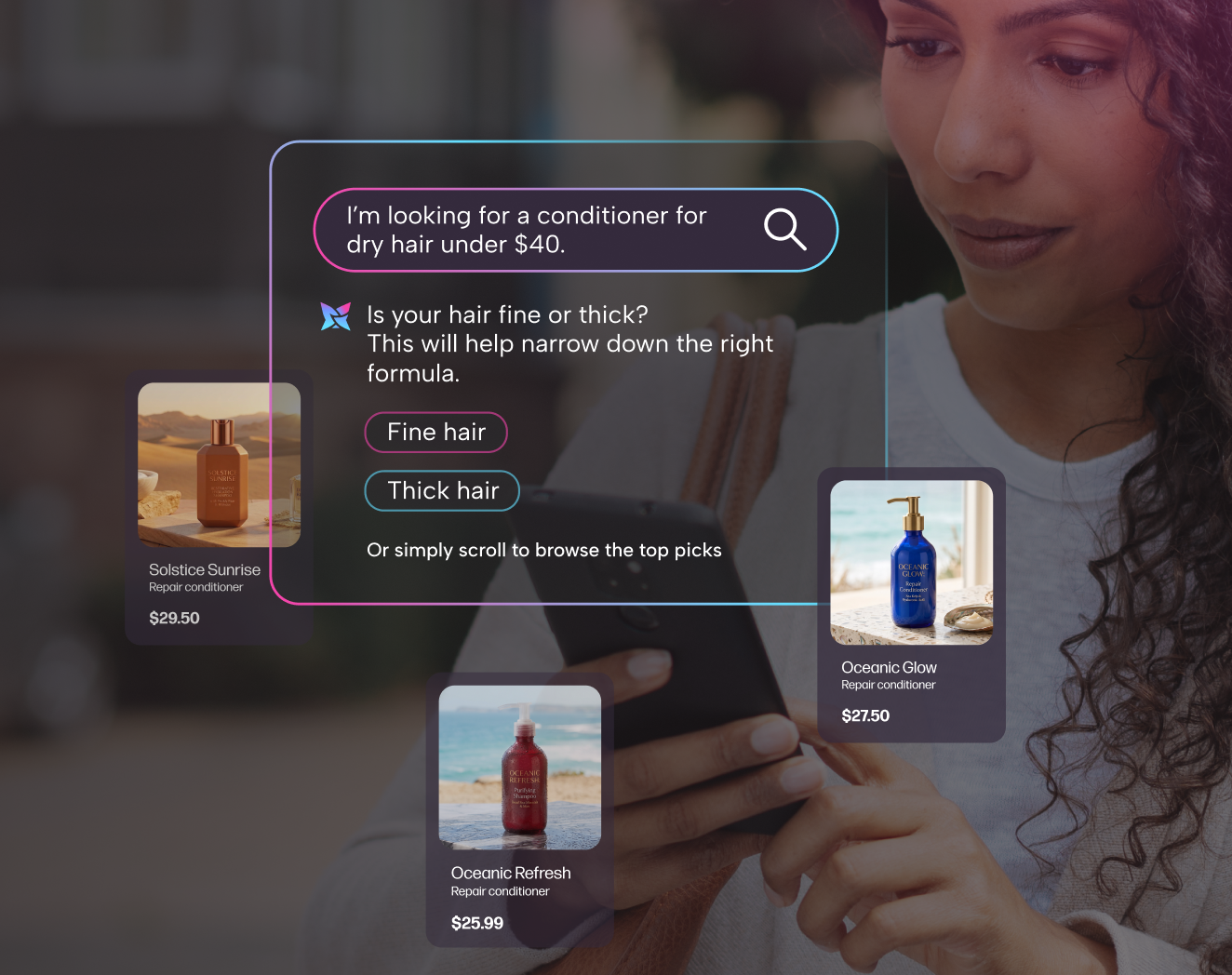
AI search and discovery: Uses semantic and vector technology to fix zero-result pages and help shoppers find products faster.
AI personalization and recommendations: Shows real-time product suggestions and category pages based on shopper behavior and intent.
AI merchandising and campaign automation: Automates product rankings and campaign visibility while letting your team set the overall strategy.
AI content personalization and customer engagement: Customizes banners, promos, and messaging for different audiences, with built-in A/B testing to track results.
How AI platforms transform ecommerce performance?
You can use AI in ecommerce to boost search accuracy, fix zero-result pages, and instantly show your shoppers the right products. Ecommerce AI platforms also personalize the shopping experience in real time across your category pages, search results, and product recommendations.
By letting the best AI platforms for ecommerce handle repetitive ranking and segmentation in the background, your team can build better merchandising best practices and drive a higher average order value (AOV).
Here’s how AI platforms have changed from traditional rules-based ecommerce:
Dimension
Traditional rules-based ecommerce
AI-driven ecommerce
Query understanding
Keyword matching with limited context
Semantic search that understands shopper intent and product context
Personalization
Static audience segments
Real-time personalization based on browsing and purchase behavior
Merchandising
Manual category rules and sorting
Automated ranking with merchandising controls layered on top
Analytics
Historical reporting
Predictive insights for demand, churn, and repeat purchases
Types of AI tools for ecommerce
Most ecommerce brands use AI to improve 4 key areas: product discovery, personalization, merchandising, and customer engagement. As these workflows become more connected, many brands are also moving toward unified Platforms that bring search, recommendations, site search analytics, and merchandising together in one place.
Below, we explore some of the best AI platforms for ecommerce across each category.
AI search and product discovery platforms
Search and product discovery solutions help shoppers find relevant products faster, especially across large catalogs where traditional keyword search often struggles to understand intent, product context, and natural language queries.
Modern AI search can interpret shopper behavior, surface more relevant products, and reduce zero-result searches that lead to lost revenue.
AI personalization and recommendations platforms
Instead of showing the same storefront to every visitor, AI personalization platforms adapt the experience in real time. It tracks live clicks, carts, and historical purchase data to predict what a shopper wants to see next.
This allows you to serve highly accurate product recommendations, tailored category pages, and custom content blocks based on an individual’s specific affinities and lifecycle stage.
AI merchandising and campaign automation platforms
Manually sorting products across massive catalogs is impossible to scale. AI merchandising platforms automate product rankings, category sorting, and promotional visibility.
It constantly shifts product placement based on real-time factors like inventory levels, profit margins, and current conversion rates. This reduces the manual work while still giving your team full control to boost specific seasonal campaigns or strategic collections.
AI content, email, and customer engagement platforms
Customer engagement platforms focus on creating more relevant experiences throughout the shopping journey. This includes personalizing onsite content, adapting promotional messaging for different audience segments, supporting lifecycle marketing efforts, and helping teams understand which experiences drive the strongest results.
Bringing it all together with Nosto
Many ecommerce teams try to solve these challenges using separate, disconnected apps. This approach creates fragmented customer data, reporting gaps, and a massive operational mess.
Powered by experience.AI™ and orchestrated by Huginn, Nosto helps brands connect customer, product, and content data in real time so every experience works together. Instead of managing multiple AI solutions across the storefront, ecommerce teams can optimize product discovery, personalization, merchandising, and customer engagement from one unified platform.
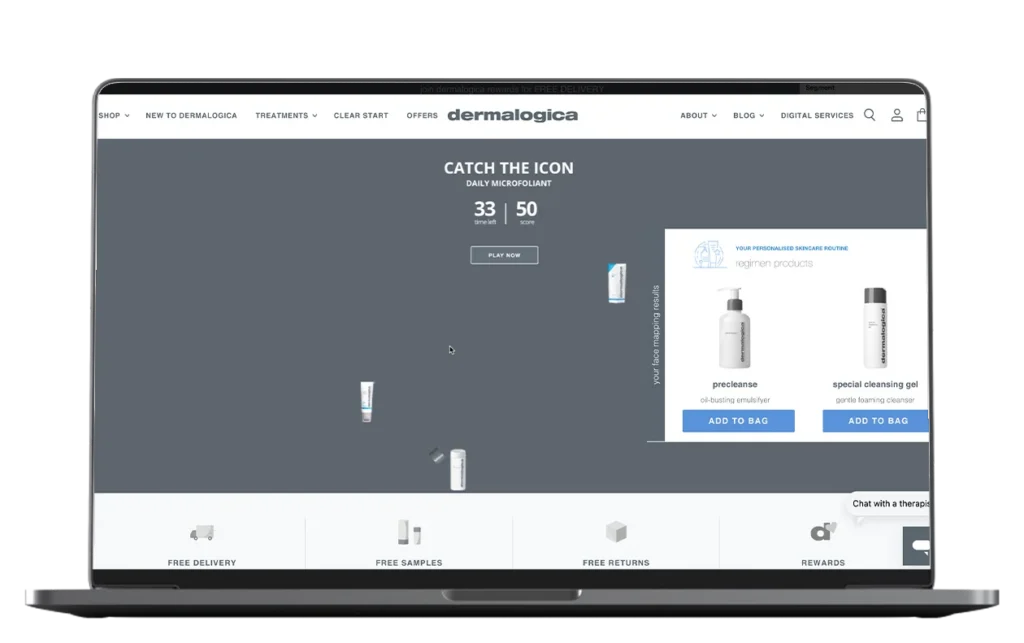
For example, when Dermalogica set out to recreate its highly personalized in-store skincare consultations online, it used Nosto to guide shoppers through the buying journey.
The result was a 13% post-click conversion rate on its digital consultation experience, a 6.93% increase in AOV, and stronger engagement from returning visitors through personalized product recommendations.
Watch a demo to see how Nosto helps brands unify search, personalization, merchandising, and content experiences. Book a demo.
How to choose the right AI platform for your ecommerce stack
With so many AI platforms on the market, choosing the right one can quickly become overwhelming, especially once integrations, data syncs, and merchandising workflows enter the picture.
To make this decision easier for you, here are some key factors that you should ensure your platform has:
Catalog scale and SKU complexity: Your platform should comfortably handle large catalogs, complex filters, and real-time inventory updates without slowing down search or category pages. Fast indexing speed and accurate search relevance become especially important once your catalog crosses tens of thousands of stock-keeping units (SKUs).
Integration depth and time to value: The AI platform should have strong native integrations with Shopify, Shopify Plus, BigCommerce, Shopware, Klaviyo, and Model Context Protocol (MCP) servers to reduce custom development work and shorten launch timelines.
ROI benchmarks and measurement: Your software needs to track metrics that drive growth, like zero-result searches, search-driven revenue, and conversion jumps. Clear reporting allows you to measure the exact impact on your business, prove your software investment, and see precisely where your merchandising needs adjustments.
Common mistakes when adopting AI platforms
Ecommerce teams invest in AI platforms expecting quick results, but performance often comes down to two things: clean product data and workflows that fit how your team actually works.
Some common mistakes that most brands make are:
Choosing features over business priorities: This approach often leads to a platform that lacks impact because the software does not target core issues like weak search relevance, low AOV, or heavy manual merchandising workloads.
Stacking disconnected platforms together: Running separate vendors for search, recommendations, analytics, and email creates reporting gaps and integration overhead.
Ignoring product data quality: Incomplete product titles, inconsistent tagging, or outdated catalog information prevent the software from working correctly, which results in weak recommendations and poor search relevance.
The future of AI in ecommerce and the rise of agentic commerce
AI is expanding from product recommendations and content creation into the day-to-day management of ecommerce operations. Ecommerce AI platforms can now understand shopper intent, adapt merchandising strategies, personalize customer experiences, and execute decisions across the storefront in real time.
This shift is already visible across customer behavior and infrastructure investments:
By 2028, Gartner predicts that 33% of enterprise software solutions will include agentic AI capabilities. This change shows how quickly infrastructure is shifting toward connected systems that coordinate search, personalization, merchandising, and analytics together.
Frequently asked questions (FAQs)
Below are the questions Heads of Ecommerce and Chief Digital Officers (CDOs) ask most often when scoping AI platforms for their stack.
How much do AI platforms for ecommerce cost?
Most AI ecommerce platforms charge you based on traffic volume, your Gross Merchandise Value (GMV), or an annual enterprise contract.
If your brand generates between $5 million and $50 million in revenue, your monthly software costs generally range from a few thousand dollars to larger enterprise investments. Your exact price depends directly on your catalog size, integration requirements, and the depth of your personalization.
Can smaller ecommerce brands use the same AI platforms as enterprise brands?
Yes, you can use the same AI platforms, but your access will depend on your catalog complexity, integration depth, and support needs. As a smaller brand, you can start with a simpler setup and add features as your customer data, traffic, and merchandising needs grow.
The main difference comes down to scale. Once you pass roughly $5 million in annual GMV, features like advanced personalization and search automation begin to make a much larger impact on your business.
Do AI platforms replace ecommerce merchandising teams?
No, the AI platform handles only repetitive tasks, such as product rankings and recommendations. Your team still has control of campaign priorities, category strategy, A/B testing, seasonal pushes, and brand presentation.
Which AI platforms integrate with Shopify Plus?
A lot of AI platforms, including Nosto, integrate directly with Shopify Plus. These native integrations connect with your store to handle Personalized Search, Product Recommendations, Merchandising automation, email marketing, and customer support across your storefront.
Ready to run search, personalization, and merchandising from one data layer?
AI is changing how visitors find products and how teams manage campaigns. As search, personalization, and merchandising are deeply interconnected, managing them in separate solutions only becomes more challenging.
That is exactly what Nosto solves. As a unified CXP, Nosto brings Personalized Search, Category Merchandising, Content Personalization, and Product Recommendations into a single data layer powered by experience.AI™ and Huginn. This gives you a connected, adaptive storefront that responds to shoppers in real time without bloating your tech stack.
Schedule a demo to see how Nosto can support smarter product discovery, personalization, and merchandising at scale.
Explore more articles
Ecommerce
Showroomprivé partners with Nosto to power personalization across one of Europe’s largest Shopify replatformings
Nosto, the agentic Commerce Experience Platform (CXP), today announced a new partnership with Showroomprivé, one of Europe’s largest online private sales players, ranked in the top 5 in the Fashion category in the latest Harris Interactive–a Toluna company x FEVAD 2025 study. A landmark Shopify replatform The partnership supports Showroomprivé’s migration to Shopify Enterprise with a […]
Read more Ecommerce
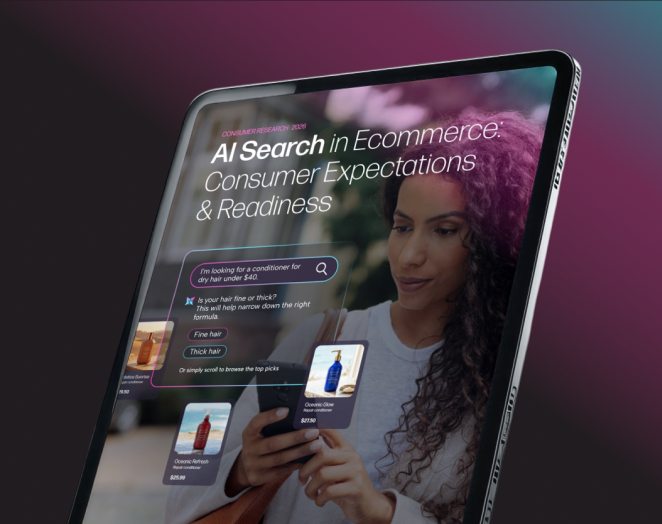
AI Search in Ecommerce: Consumer Expectations & Readiness
Read more News & Press
New research: Retailers without onsite AI search risk losing shoppers to ChatGPT and Claude
40% of online shoppers are likely to turn to AI assistants if retailers’ onsite search doesn’t deliver – while 72% have already tried or are open to retailers using AI to improve their onsite search New York, September 18 – 59%¹ of US and UK consumers surveyed admit they often leave ecommerce stores because the […]
Read more News & Press
Nosto becomes a Klaviyo Premier Technology Partner
Nosto has been recognized as a Klaviyo Premier Technology Partner, the highest tier in Klaviyo’s technology partner program. This achievement marks an important milestone in our long-standing partnership with Klaviyo and reflects our continued investment in the AI Customer Journey Integration, which brings together Klaviyo’s customer intelligence and Nosto’s commerce intelligence to create more connected […]
 Personalized Search
 Category Merchandising
 Product Recommendations
 Post-Purchase Upsell
 Dynamic Bundles
 Personalized Emails
 A/B Testing & Optimization
 Content Personalization
 Behavioral Pop-Ups
 Shoppable UGC
 Shopify Plus
 Shopify
 Salesforce Commerce Cloud
 Shopware
 Adobe Commerce
 BigCommerce
 Klaviyo
 Attentive
 Yotpo
Yotpo Tapcart
 Google Analytics
 TikTok
 Instagram
 Facebook